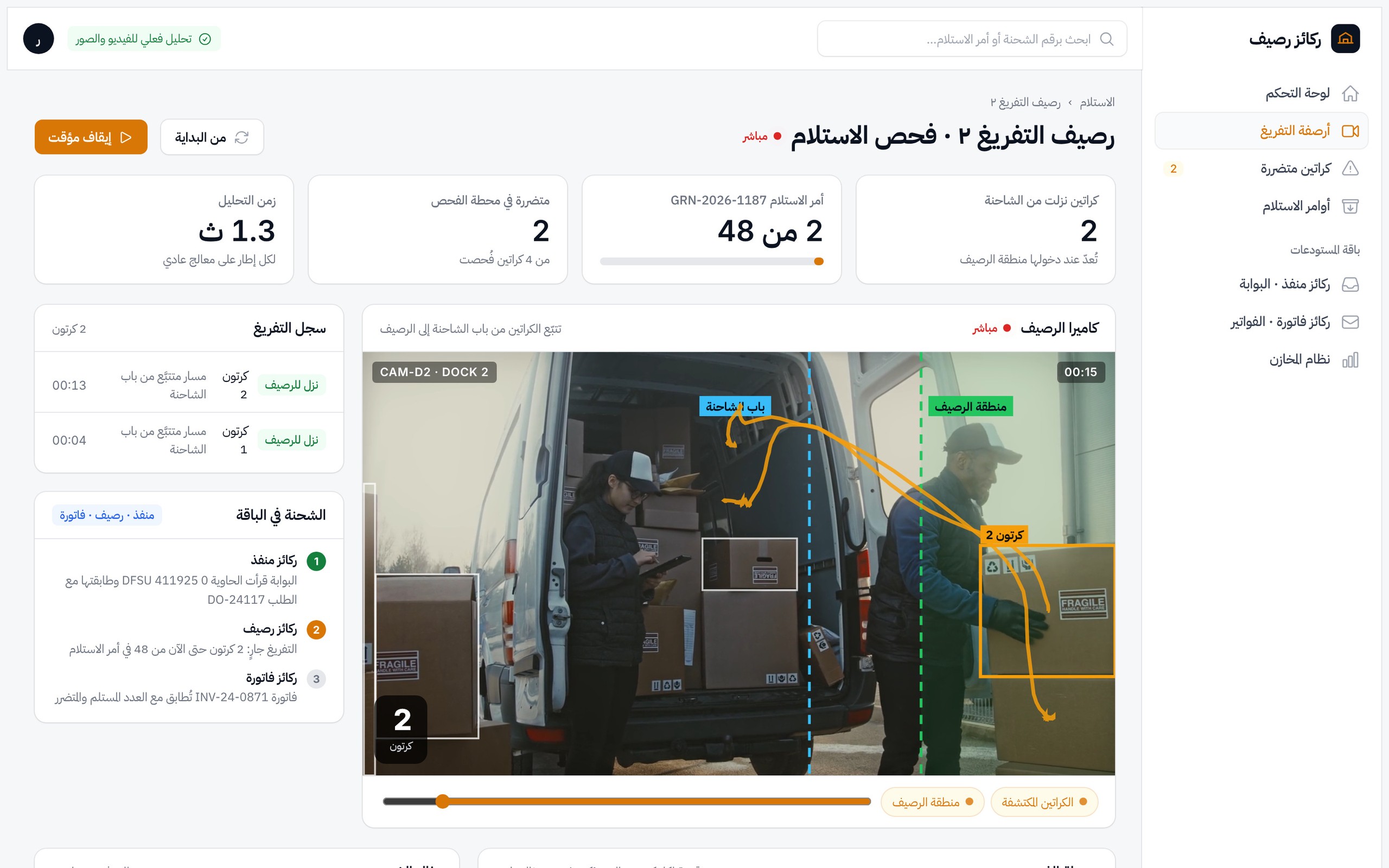
At the unloading dock, a receiving clerk counts cartons by eye as they come off, writes the number on paper, and notices a damaged carton if they happen to. If the damage is found days later on the shelf, it is hard to prove it arrived damaged from the supplier. Rakaiz Raseef counts and documents at the moment of receiving.
How it works
- Dock camera: a raised camera above the dock door overlooking the truck door and the area where goods are put down
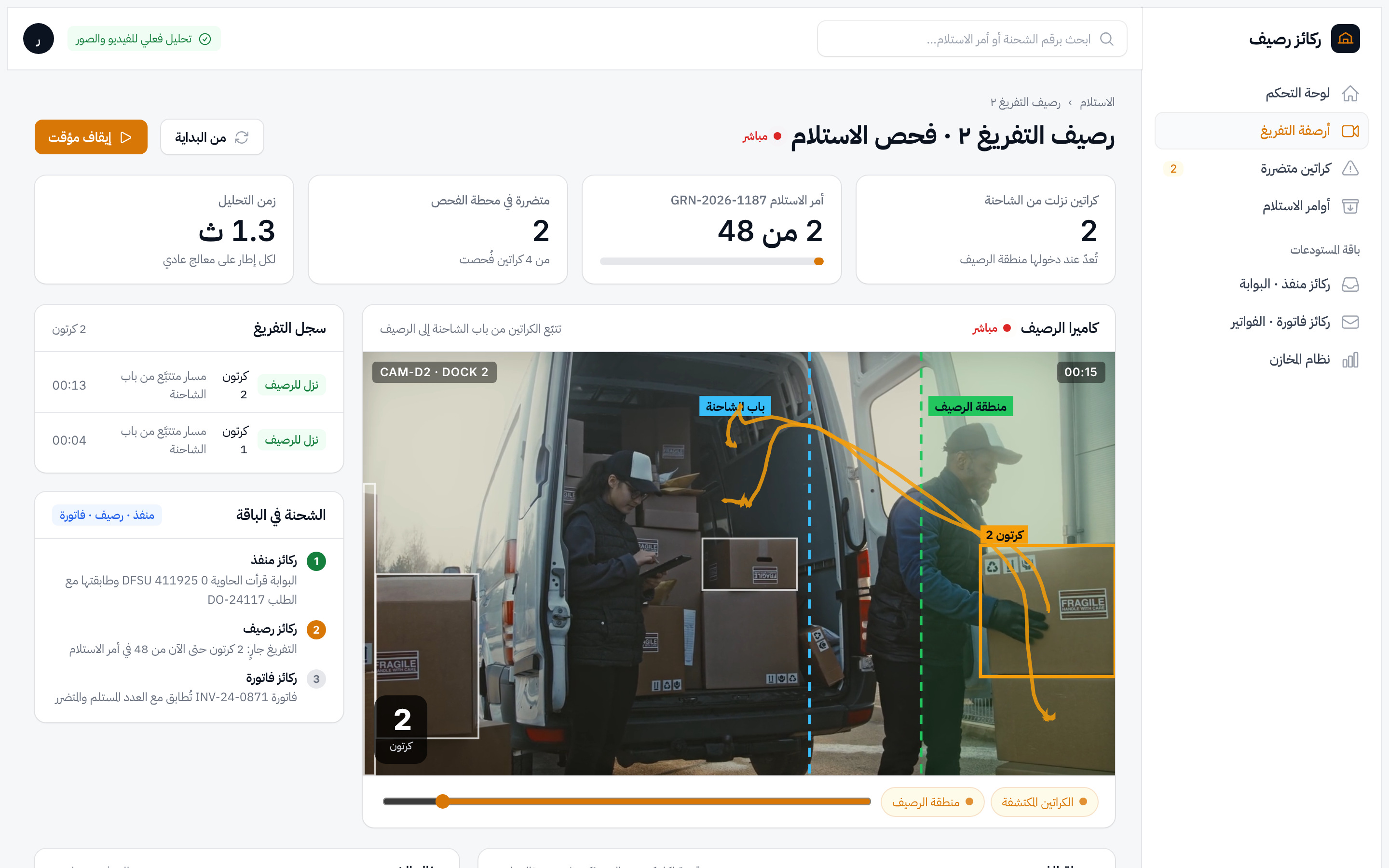
- Tracking and counting: every carton is tracked frame by frame and counted when it moves from the truck door into the dock area, so no carton is counted twice
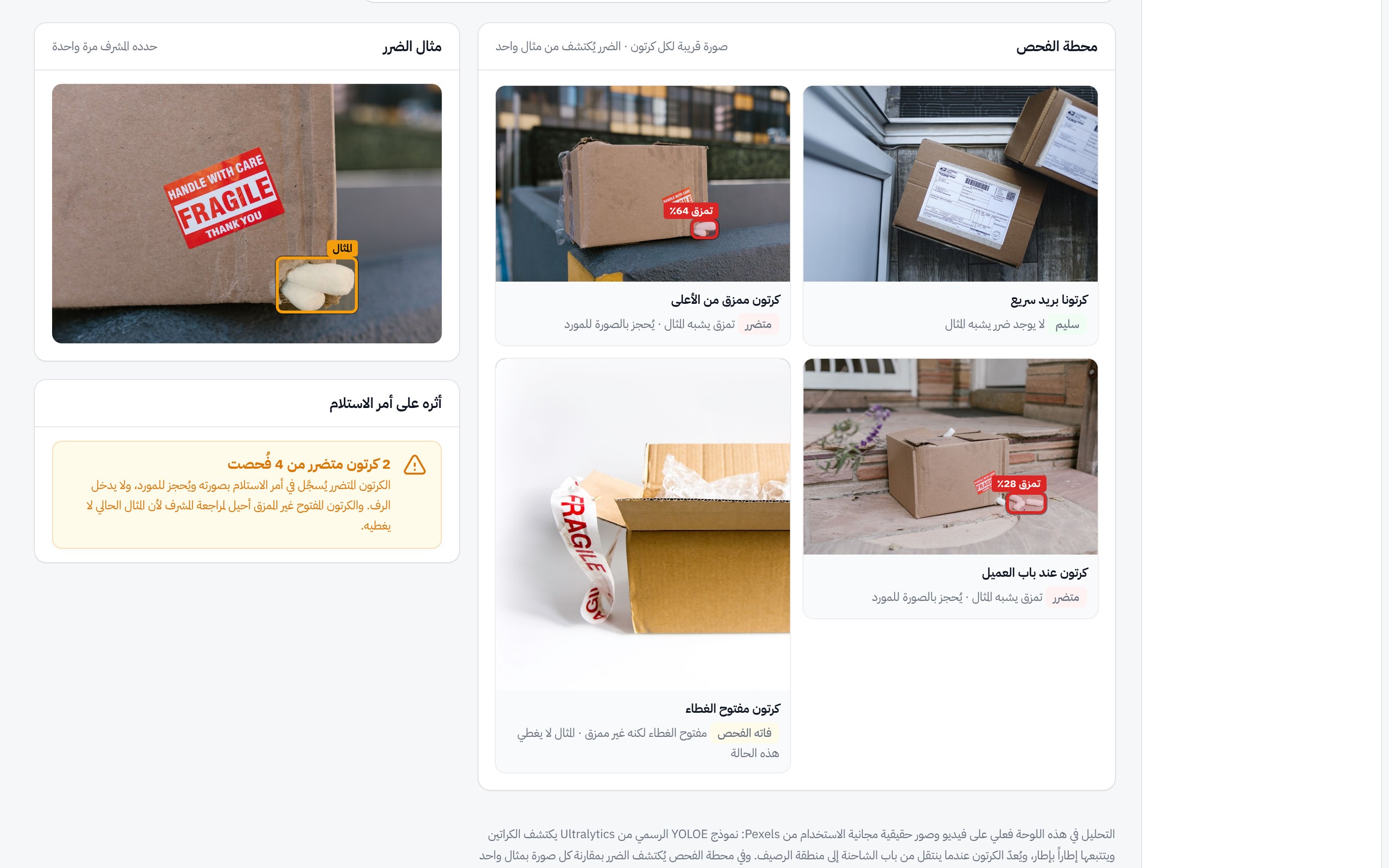
- Inspection station: a close-up photo of each carton or pallet, which the system compares with an example of a torn carton marked once by a supervisor
- Goods receipt: the count is compared with the goods receipt, and a damaged carton is recorded with its photo and held for the supplier before it reaches the shelf
The warehouse bundle
Rakaiz Raseef is the middle link: Rakaiz Manfath reads the container number at the gate and matches it to the order, Rakaiz Raseef counts and inspects what actually came off, and Rakaiz Fatoora matches the supplier invoice with the received and damaged count. All three connect to the Warehouse & Procurement System.
Live dashboard
The dock camera feed with each carton's path, the unloading counter against the goods receipt, a log of every carton and when it came off, and the inspection station with each carton's photo and result.
A good fit if you
- Run a warehouse or distribution centre that receives trucks every day
- Have disputes with suppliers over short or damaged deliveries
- Want photo records of every shipment's condition at receiving
Customisable
- Examples for other damage types: wet, dented, cut tape, leaning pallets
- Counting pallets instead of cartons at large docks
- A GPU device next to the camera for real-time analysis
- Integration with your warehouse system via API