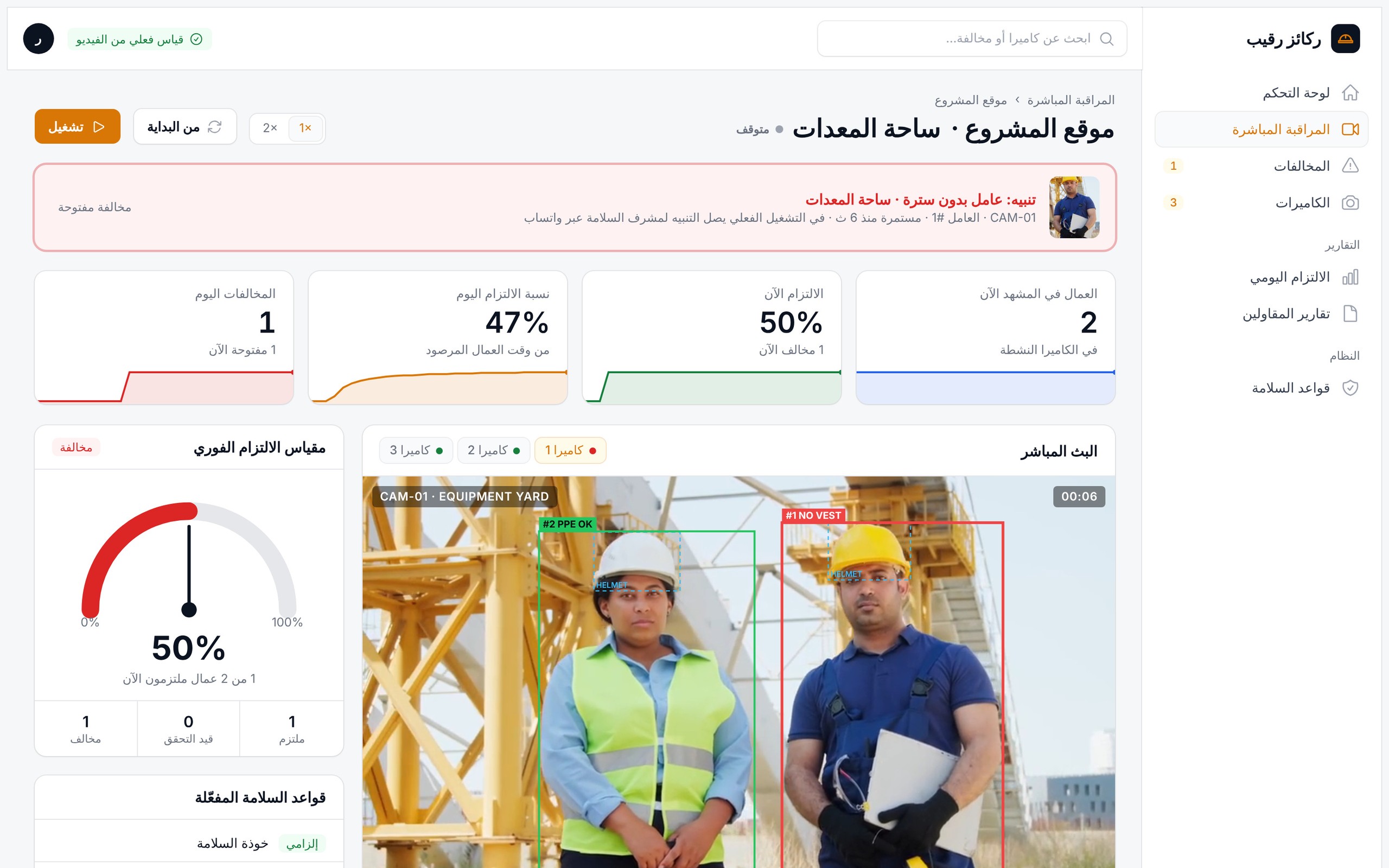
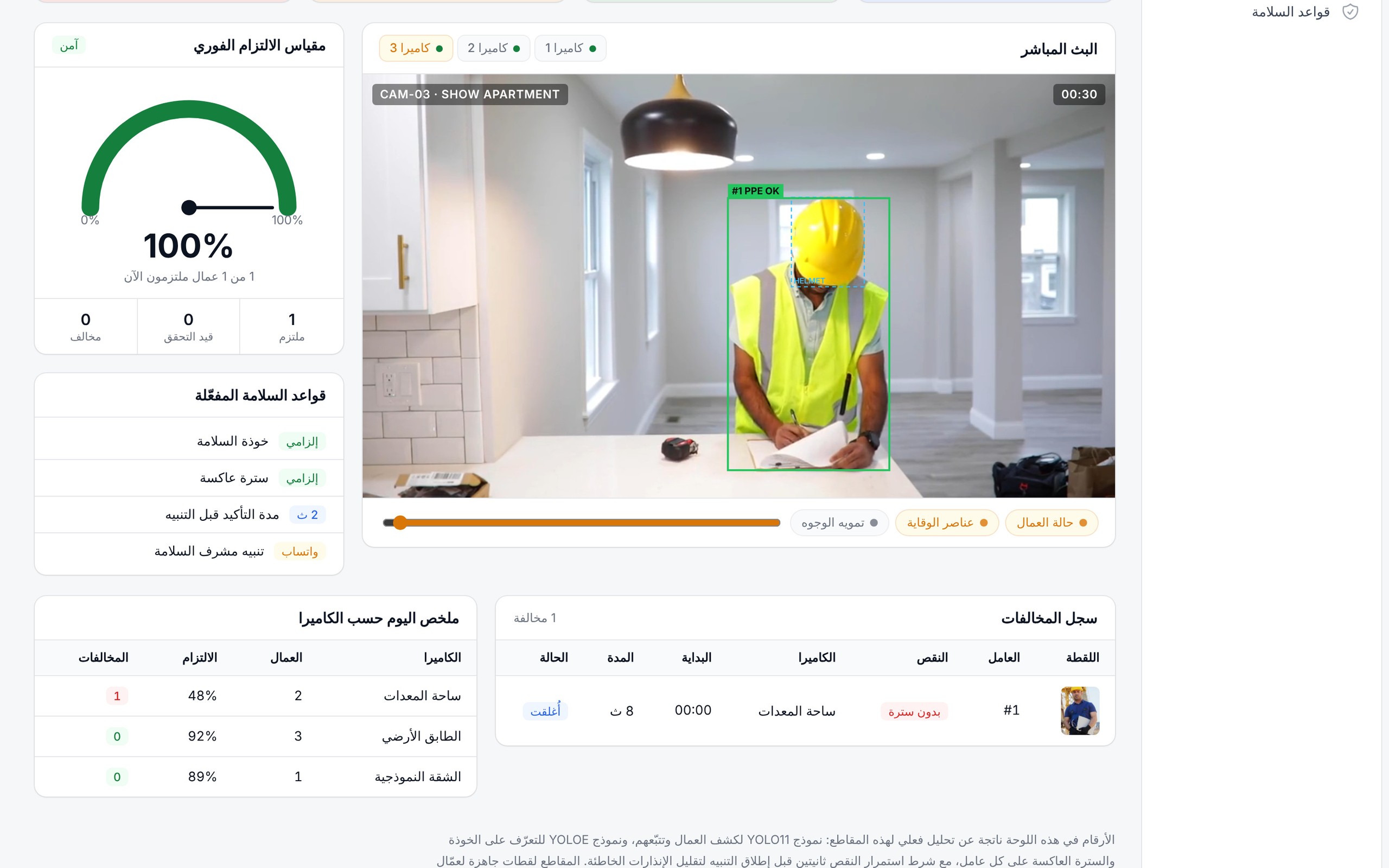
A safety supervisor cannot be everywhere. On a large construction site or a factory with several lines, most violations are found on periodic rounds or after an accident has happened. The cameras are already on site, but nobody watches them all day. Rakaiz Raqeeb turns those cameras into a safety monitor that works around the clock.
How it works
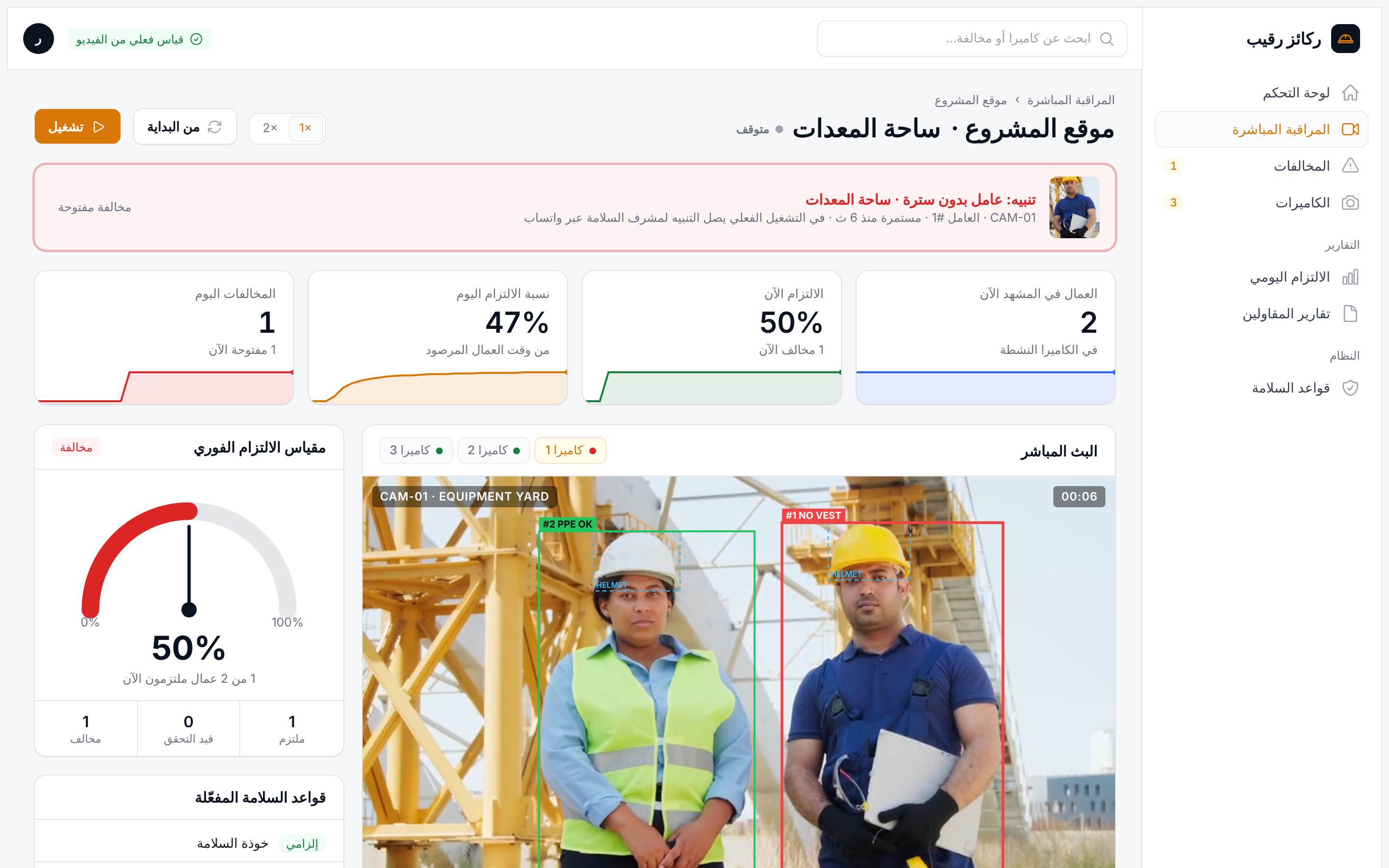
- Worker detection: an AI model detects every worker in the picture and tracks them with a stable number
- Equipment check: each worker is checked individually: is the hard hat on their head, and is the vest on their torso?
- Confirm before alerting: if something is missing for two seconds or more, a violation opens and a photo of the worker is saved as evidence
- Instant alert: the safety supervisor gets it on WhatsApp or in the app, with the photo and the camera name
A real-time dashboard
A live feed from the site cameras showing each worker's status (compliant, checking, violating), a prominent alert for any open violation, an instant compliance gauge, a violation log with photos, time and duration, and a daily summary for every camera.
Fewer, more accurate alarms
Detection can miss a vest for a moment when a worker raises an arm or turns around. So the system judges the last three seconds rather than a single frame, remembers equipment it saw on the worker moments earlier, and only alerts once the gap persists. The result is alerts a supervisor trusts instead of ignoring.
Rules that fit your site
- Hard hats and high-visibility vests to start, with safety glasses, gloves and safety boots as options
- Restricted zones for authorised staff only, or danger zones around heavy machinery
- Different rules per camera, area or shift
- Compliance reports per contractor to follow performance on large projects
A good fit if you
- Are a contractor running several construction sites and need to follow safety remotely
- Run a factory or warehouse with production lines and heavy equipment
- Manage a project that needs documented numbers for safety reports and audits
Privacy
The system judges safety equipment and does not identify workers, and faces can be blurred in any video that is shown. Processing happens on a device on site, and only alerts and numbers are sent, in line with the Personal Data Protection Law.