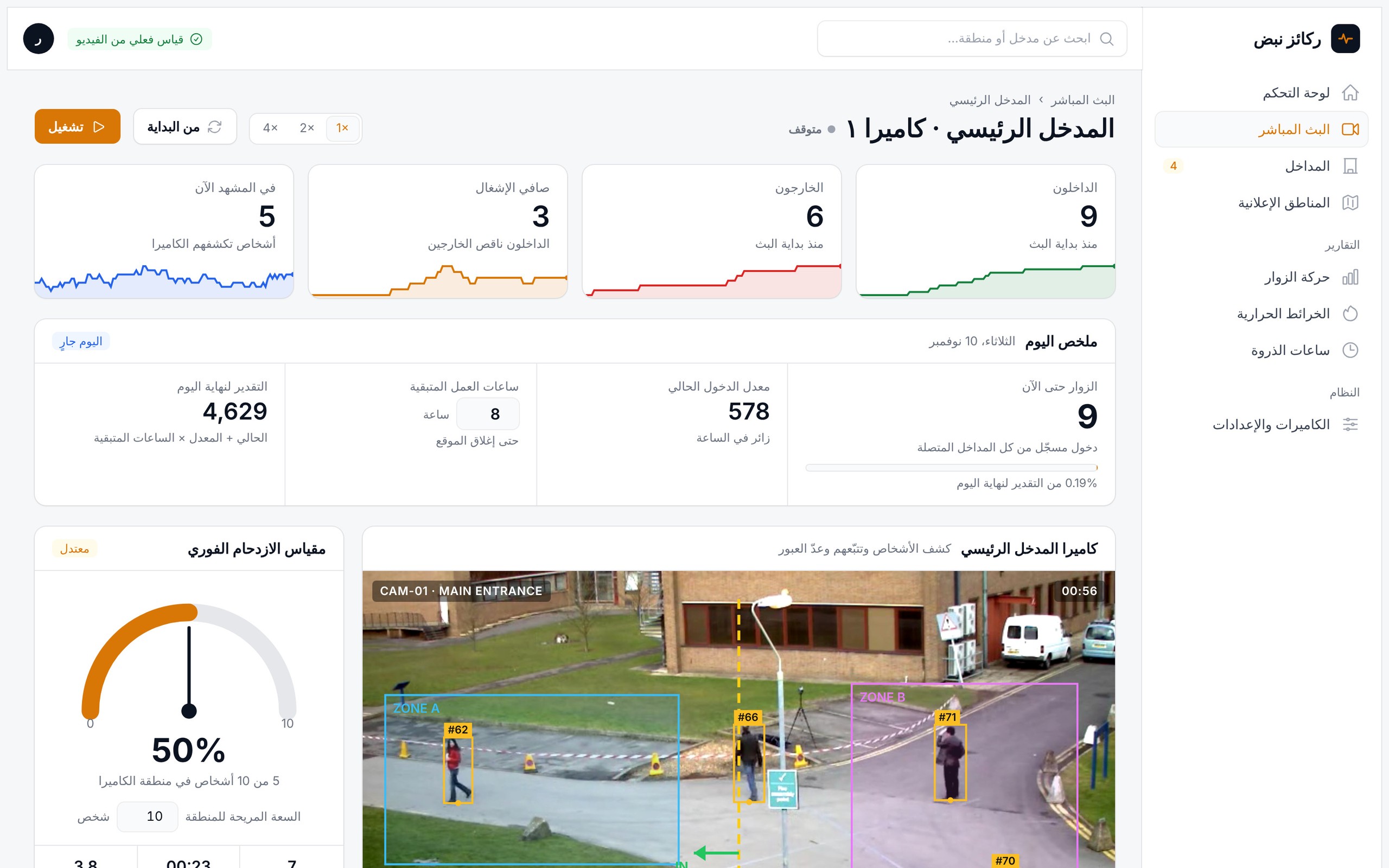
Most malls and exhibitions estimate their footfall, while tenants and advertisers ask one question: how many people actually walk past my shop or my ad? Rakaiz Nabd answers it with real-time numbers from the cameras already on site.
How it works
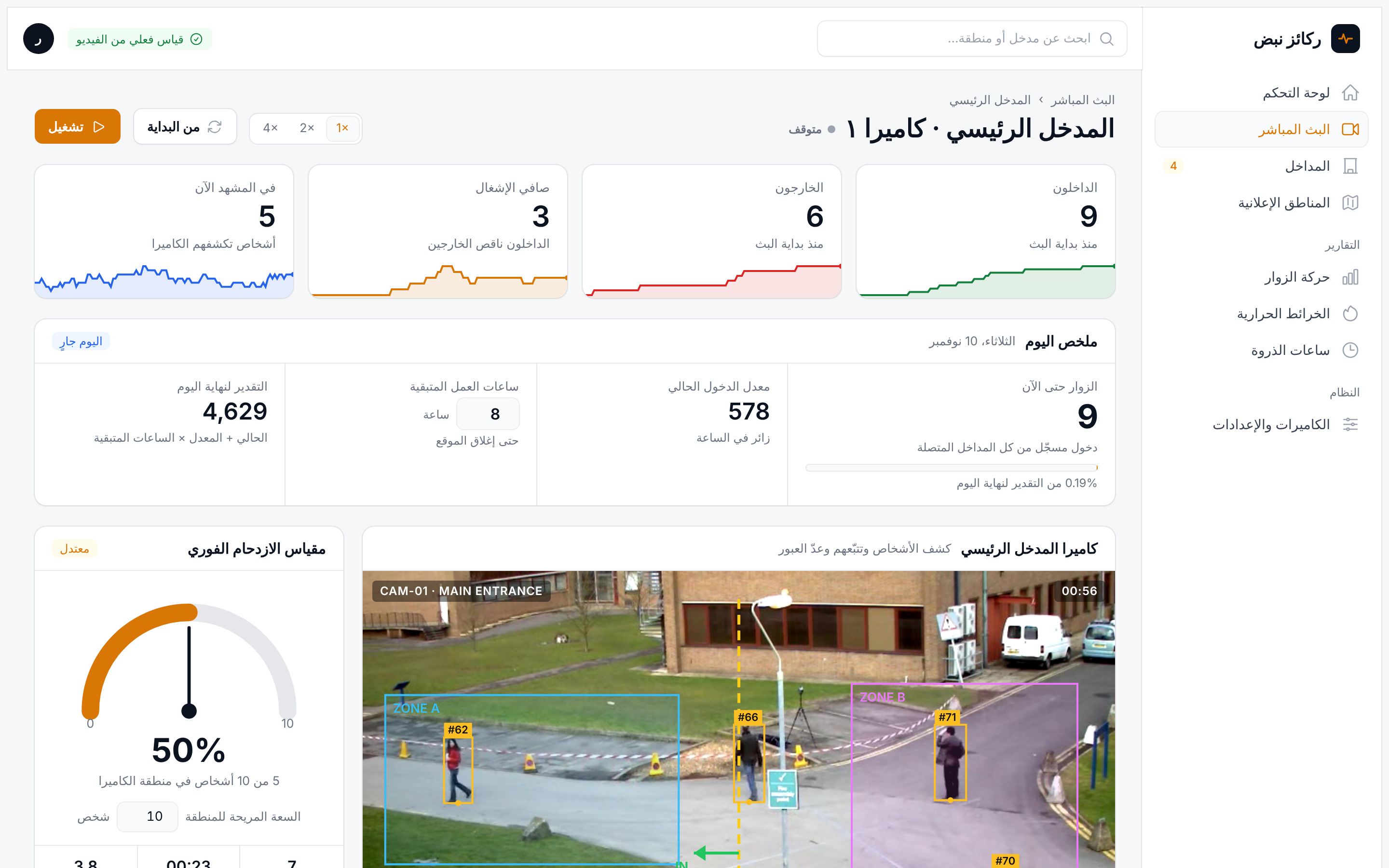
- A camera at each entrance captures movement, and an AI model detects and tracks people
- A virtual counting line at the entrance: crossing it inward counts as an entry, crossing it outward counts as an exit
- Current occupancy is the difference between entries and exits across all entrances
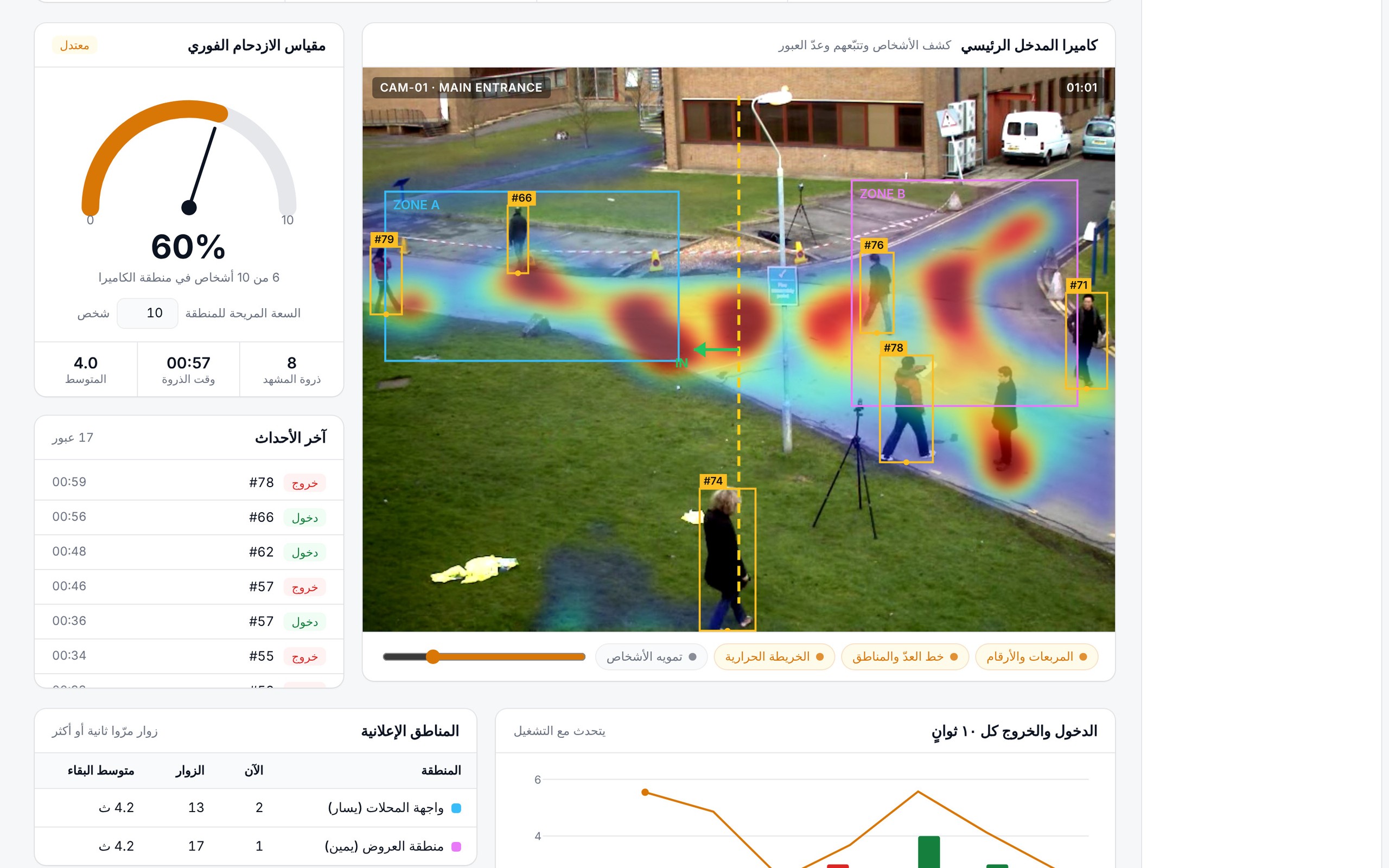
- A heatmap shows the busiest walkways and areas through the day
A real-time dashboard
A live camera feed with detection boxes and the counting line, an instant crowding gauge that changes colour as it nears the set capacity, a log of every crossing, an entries and exits chart, and an ad-zone table that updates with every movement.
At the top of the dashboard sits today's summary: visitors so far, the current entry rate per hour, and an estimate of the end-of-day total based on that rate and the remaining opening hours, followed by an end-of-day report with the final numbers.
For ad zones and tenants
Mark any area in the picture, such as a shop front, a digital screen or a display stand, and the system counts how many visitors passed through it and how long they stayed. These are numbers you can show an advertiser or tenant instead of estimates.
A good fit if you
- Run a mall or shopping centre that sells ad space or leases shops
- Organise exhibitions or events and need the actual attendance for each day and hour
- Want to schedule security, cleaning and operations around real peak times
Customisable and built to grow
- Multiple entrances and floors in one dashboard
- Conversion rate: link footfall to sales from your point-of-sale system to see how many visitors became buyers
- Alerts by WhatsApp or email when any area goes over capacity
- Integration with Rakaiz Obour to connect foot traffic with vehicle traffic in the car park
Privacy
The system counts people without identifying them, and people can be blurred in any video that is shown. Processing happens on a device next to the camera and only the numbers are sent to the dashboard, in line with the Personal Data Protection Law.